
Debi Thomas: The Woman Who Skated Into History and Kept Going

The ice was cold.
But the pressure was colder.
By the time Debi Thomas stepped onto Olympic ice in Calgary in 1988, she was carrying more than a routine. She was carrying expectation, history, race, ambition, and the weight of a world that wanted to see whether she could do what so many had been told was impossible.

She was only 21 years old.
A champion.
A student.
A Black woman in a sport that had rarely made room for Black women at the highest level.
And she was standing at the center of one of the most watched figure skating moments of the decade.
A Star Living Two Lives
Debi Thomas was never just a skater.
From the beginning, she carried more than one dream. She wanted to be a figure skating champion, and she wanted to become a doctor. According to the National Library of Medicine, Thomas told her mother when she was just five years old that she wanted to be both a champion figure skater and a doctor. Years later, she would become both.
That alone made her extraordinary.
Most elite athletes are asked to give everything to one pursuit. Every hour, every meal, every school decision, every private sacrifice is supposed to serve the sport. But Debi Thomas refused to become one-dimensional.
On the ice, she trained like a champion.
Off the ice, she studied like a future physician.
While competing at the highest levels of figure skating, Thomas was also a student at Stanford University. At a time when many young athletes postponed education to chase medals, she insisted on keeping both parts of herself alive. She did not want to be told that excellence had to be narrow. She did not want to choose between her mind and her body, between the rink and the classroom, between athletic beauty and intellectual discipline.
People questioned whether she could do both.
She decided to prove that she could.
The Champion Before Calgary
Before the world called it the “Battle of the Carmens,” Debi Thomas had already made history.
In 1986, she won the World Figure Skating Championship, becoming one of the most celebrated American skaters of her generation. She also became a U.S. national champion and was recognized as a trailblazer in a sport where Black athletes were still too rare at the elite level.
She was powerful, elegant, and technically ambitious.
She could command the ice.
She could attack difficult jumps.
She could perform under pressure.
And she did all of this while navigating a sport often shaped by image, tradition, and unspoken expectations about who belonged.
Debi Thomas did not fit the mold.
She expanded it.
Calgary and the Battle of the Carmens
The 1988 Winter Olympics in Calgary became one of the defining moments of Debi Thomas’ life.
The world was watching her rivalry with East Germany’s Katarina Witt. Both women chose music from Georges Bizet’s opera Carmen for their long programs, and the media quickly turned the competition into a dramatic spectacle: the “Battle of the Carmens.” It was more than a skating rivalry. In the imagination of the press, it became a symbolic Cold War contest between East and West, glamour and grit, expectation and execution.
Debi entered the long program with a real chance at Olympic gold.
But the skate did not unfold the way she had imagined.
Early mistakes changed the energy of the program. She missed key elements. The command that had made her a world champion began to slip. In a sport where fractions matter and momentum can vanish in seconds, one mistake can become a shadow that follows the rest of the routine.
She kept skating. But the gold was gone.
Katarina Witt won the Olympic title. Canada’s Elizabeth Manley took silver. Debi Thomas won bronze.
For some, bronze might have felt like disappointment.
But history understood what had happened.
With that medal, Debi Thomas became the first Black athlete to win a medal at the Winter Olympics.
She did not leave Calgary with the color medal she wanted.
She left with something no one could take away.
A first.
A breakthrough.
A place in history.
“Back to School”
After the ceremony, Debi Thomas did not disappear into celebration.

She returned to the other life she had been building.
School.
Medicine.
The future she had always imagined beyond skating.
Olympics.com notes that, unlike many skaters who pursued long professional skating careers, Thomas returned to school to become a doctor, graduating from Stanford in 1991 and from Northwestern University Medical School in 1997 before training in orthopedic surgery.
That transition matters.
Because Debi Thomas’ story is not simply about what happened on the ice. It is about what happened after the applause faded.
She became an orthopedic surgeon.
She traded costumes for a white coat.
She moved from the precision of blades to the precision of medicine.
For years, she lived the second half of the dream she had spoken aloud as a child.
That is part of her greatness, too.
Not just that she won.
Not just that she medaled.
But that she kept becoming.
The Hard Years
Debi Thomas’ later life was not easy.
After her medical career, she faced serious personal and financial struggles. Public reports described periods of instability, money problems, and difficult living conditions, including a time when she was living in a trailer. Those chapters are often retold as if they erase everything that came before them.
They do not.
They are part of the story, but they are not the whole story.
It is important to speak of struggle with dignity. Debi Thomas is not a cautionary headline. She is a human being. A history-maker. A woman who carried immense pressure, achieved extraordinary things, and later faced hardships in public view.
Too often, when Black women fall, the world rushes to turn their pain into spectacle.
But Debi Thomas deserves better than spectacle.
She deserves context.
She deserves grace.
She deserves to be remembered not only for the height of her achievements or the difficulty of her later years, but for the fullness of her life.
The champion.
The student.
The physician.
The survivor.
The woman still standing.
The Return
Then, decades after Calgary, Debi Thomas returned to the ice.
In 2023, at age 56, she competed at the World Figure and Fancy Skating Championships in Lake Placid, New York. NBC Sports reported that she placed second in the ladies figure championship, marking a remarkable return to competition after decades away from that form of skating.
There is something deeply moving about that.
Not because she needed to prove anything.
She had already done that.
But because returning to the ice meant reclaiming something.
The body remembers.
The ice remembers.
And sometimes, after life has taken more than anyone expected, the act of returning becomes its own kind of victory.
She was no longer the 21-year-old in Calgary carrying the hopes of a nation.
She was a woman in her fifties, stepping onto the ice with history behind her and courage still inside her.
That return was not about Olympic gold.
It was about presence.
It was about resilience.
It was about saying: I am still here.
More Than a Medal
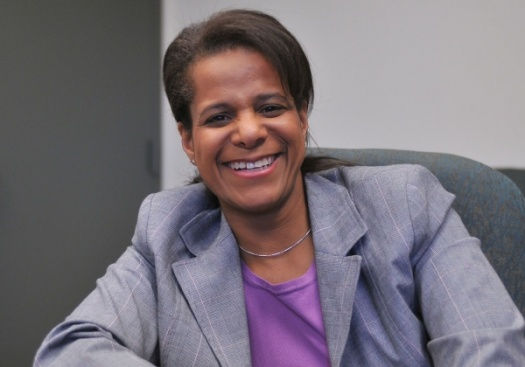
Debi Thomas did not get the Olympic gold medal many expected her to win in 1988.
But she earned something larger than a single night.
She carved open possibility.
She made it impossible to say that Black athletes did not belong on Olympic ice.
She showed that brilliance could be athletic and academic, artistic and scientific, graceful and fierce.
She was a world champion.
She was an Olympic medalist.
She was a Stanford graduate.
She was a doctor.
She was a Black woman who dared to live more than one dream at once.
That is the part we must remember.
Because Debi Thomas did not simply skate a routine.
She opened a path.
Every time a Black child sees herself in a sport where she has been underrepresented, Debi Thomas is part of that reflection.
Every time an athlete refuses to abandon education for competition, Debi Thomas is part of that legacy.
Every time a woman is told she must choose only one version of herself, Debi Thomas’ life answers back:
No.
You can be more.
Still Standing
The ice was cold.
The pressure was colder.
But Debi Thomas stepped onto it anyway.
She fell short of gold, but she did not fall short of history.
She lived through applause and disappointment, achievement and hardship, public celebration and public struggle. And still, she returned.
That matters.
Because legends are not only made by perfect endings.
Sometimes they are made by people who keep rising after the story gets complicated.
Debi Thomas was a champion on the ice.
A doctor beyond it.
A barrier-breaker forever.
They tried to say she could not do it all.
They tried to count her out when she fell.
They failed.
Debi Thomas did not just skate.
She carved a path.
And she is still standing.
Support the Stories That Matter
At Obsidian Guide, published by RTC Publishing Group, LLC, we believe powerful stories deserve to be remembered, preserved, and shared.
If this piece informed, inspired, or moved you, consider making a small donation to support the research, writing, and storytelling behind this work. Every contribution helps us continue creating meaningful historical and cultural content.
Have a Black-owned business, product, service, or experience? Submit it to Obsidian Guide, a curated platform created to celebrate exceptional Black-owned brands and cultural stories.


Comments