
A Local’s Guide to Austin, Texas

Hidden Gems, Must-Visit Spots, and Cultural Experiences in Central Texas
Austin has a way of revealing itself slowly. First, visitors notice the live music, the lakeside views, the murals, the barbecue smoke, and the unmistakable creative pulse. But the city’s deeper beauty lives beyond the obvious itinerary — in its historic neighborhoods, independent businesses, cultural landmarks, quiet green spaces, and the communities that have shaped Austin long before it became one of the country’s most talked-about destinations.

This local’s guide is for travelers who want more than a weekend checklist. It is for those who want to experience Austin with intention: where to wander, what to notice, who to support, and how to understand the cultural fabric of Central Texas.
Start with East Austin
To understand Austin, begin in East Austin. This side of the city carries much of Austin’s Black, Mexican American, artistic, and entrepreneurial history. Today, it is a layered neighborhood — part cultural memory, part creative renaissance, part cautionary story about rapid development and displacement.
Spend time exploring the small businesses, galleries, cafés, murals, and neighborhood corridors that give East Austin its identity. Visit Austin’s Black heritage guide highlights the city’s Black-owned restaurants, boutiques, cultural activities, historic landmarks, public art, and music venues as part of the broader Black Austin experience.
For an Obsidian Guide traveler, East Austin is not simply a “cool neighborhood.” It is a place to move through with respect — noticing the legacy, supporting local ownership, and choosing businesses that preserve cultural presence in a changing city.
Visit the Six Square Cultural District

One of Austin’s most meaningful cultural anchors is Six Square, the city’s Black Cultural District. It represents a historic area tied to Black life, entrepreneurship, arts, and civic presence in Austin. Visitors interested in Black history and culture can use guides from organizations such as Black Cultural Arts District resources and Visit Austin’s Black Austin itinerary to explore museums, restaurants, landmarks, parks, and cultural sites connected to the city’s Black heritage.
This is where a local’s guide becomes more than travel content. It becomes cultural context.
Spend Time with Austin’s Museums and Cultural Institutions
Austin’s museum landscape is richer than many first-time visitors expect. The Austin Museum Partnership lists a range of cultural institutions across the city, including the Art Galleries at Black Studies at the University of Texas, which centers narratives of Africa and the African Diaspora through exhibitions and social inquiry.
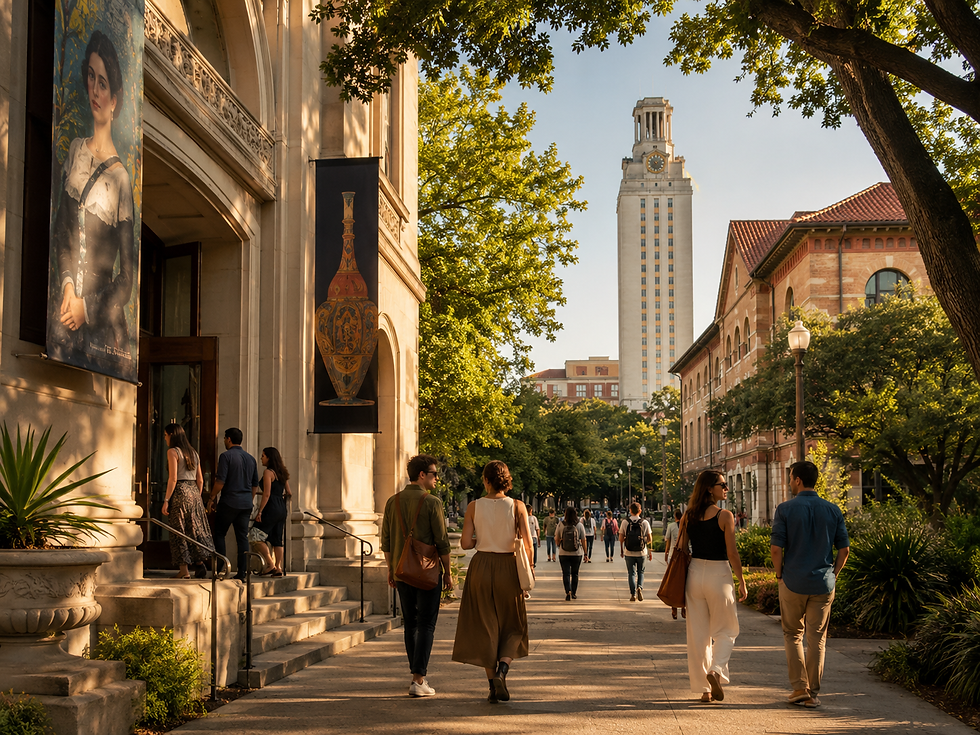
For a thoughtful cultural day, consider pairing a museum visit with a walk through the University of Texas area, a stop at a locally owned café, and an evening performance or live music experience. Austin’s best rhythm often comes from mixing structured cultural stops with unplanned discovery.
Find the Hidden Green Spaces
Austin’s outdoor life is part of its identity. Locals know that the city is best experienced in the morning or golden hour, when the heat softens and the water, trees, and limestone landscapes feel cinematic.

Beyond the well-known Barton Springs and Lady Bird Lake, look for quieter parks, tucked-away trails, neighborhood gardens, and scenic overlooks. Visit Austin’s hidden gems guide points visitors toward quiet parks, public art, speakeasy-style bars, unusual attractions, and lesser-known local spots beyond the most familiar tourist route.
For a slower Austin experience, build your day around one outdoor anchor: a morning walk, an afternoon pool visit, or a sunset overlook. Then let the rest of the itinerary breathe.
Make Room for Live Music Beyond the Obvious
Austin’s live music reputation is deserved, but the most memorable nights are not always the biggest venues. Smaller stages, neighborhood bars, cultural festivals, jazz nights, blues sets, open mics, and intimate performance spaces often offer a more authentic connection to the city.

A local approach is simple: follow the sound, but pay attention to who is on stage and what community the venue serves. Austin’s Black cultural itinerary specifically points visitors toward local Black musicians, comedians, artists, restaurants, and businesses as part of the city’s cultural experience.
For travelers seeking depth, music should not be treated as background entertainment. In Austin, it is part of the city’s living archive.
Explore Austin Through Black-Owned Businesses
A refined Austin itinerary should include intentional spending. Black-owned businesses in Austin span restaurants, boutiques, salons, wellness providers, bookstores, professional services, creative studios, and community-rooted enterprises. Austin Black Business describes its work around empowering the Black Austin community through news, events, business visibility, and cultural initiatives.
For Obsidian Guide readers, this is where travel becomes participation. Choosing where to dine, shop, book services, and spend leisure time can help sustain the entrepreneurs who shape Austin’s cultural and economic life.
Look for Black-owned restaurants for dinner, boutiques for distinctive retail, wellness practitioners for restorative experiences, and cultural organizations for events that connect you more deeply to the city.
Take a Day Trip into Central Texas
Austin’s location makes it an ideal base for exploring Central Texas. The Hill Country, nearby lakes, historic towns, wineries, swimming holes, and river destinations all expand the experience beyond the city limits.
Lake Travis, the Texas Hill Country, and river towns such as those near the Guadalupe offer a different texture of Central Texas life — more open sky, slower pace, and a distinct relationship to water and landscape. Recent Central Texas travel coverage has highlighted riverfront dining, tubing experiences, and Lake Travis boating as part of the region’s seasonal appeal.
A strong local-style itinerary might include Austin for culture and dining, followed by a Hill Country day for nature, water, and scenic leisure.
What to Eat: Go Beyond the Greatest Hits
Austin’s food scene is famous for barbecue, breakfast tacos, food trucks, and Tex-Mex, but a richer dining experience includes neighborhood restaurants, chef-led concepts, family-owned spots, vegan kitchens, bakeries, cafés, and culturally specific foodways.
A local’s dining strategy: choose one iconic Austin meal, one Black-owned or culturally rooted restaurant, one neighborhood café, and one unexpected food truck. That mix offers a more complete taste of the city.
The goal is not to chase every “best of” list. The goal is to eat in a way that reveals Austin’s communities.
A Refined 48-Hour Austin Itinerary
Day One: Begin in East Austin with coffee or breakfast at a locally owned spot. Spend the late morning exploring murals, boutiques, and cultural landmarks connected to Black Austin. Visit a museum or gallery in the afternoon, then reserve the evening for live music in a smaller venue.
Day Two: Start with a walk near Lady Bird Lake or a swim-focused morning if the weather allows. Spend midday shopping independent boutiques or visiting a bookstore. In the afternoon, explore a cultural district, park, or museum. Close the trip with a thoughtful dinner and a final music set, cocktail lounge, or quiet rooftop view.
The Local’s Rule: Slow Down
Austin is often marketed as energetic, weird, and fast-growing. All of that is true. But the city is best experienced slowly. The most meaningful Austin moments often happen between destinations: a conversation with a shop owner, a mural on a side street, a musician warming up before a set, a quiet view over the water, a meal that feels deeply tied to place.
A local’s Austin is not only about where to go. It is about how to move.
Go with curiosity. Spend with intention. Listen carefully. Notice the history beneath the newness.
That is where Austin becomes more than a destination — it becomes a cultural experience.


Comments